Knowledge Base

There is a high bar set for organizations seeking to provide ISO Level III Calibration Standards. It takes a serious investment in both equipment and the capabilities of technicians to qualify.
There are only four Authorized Laboratories around the globe. Technidyne Laboratory Services is the leading provider of ISO Level III optical property calibration standards in the world. In addition to being the only ISO Level III optical laboratory in the USA, our calibration laboratory is also the sole provider of calibration standards for many TAPPI methods, including TAPPI Brightness/Fluorescence, TAPPI Opacity and TAPPI Color.
As one of just a hand-full of Authorized Laboratories in the world, it is imperative that our facility is maintained with the best equipment and technical capabilities possible. Our lab follows ISO 17025 guidelines on documentation, training and competence. Likewise, our calibration laboratory is equipped with Master instruments for:
OPTICAL
- Diffuse (d/0°) ISO Brightness (ISO 2469, ISO 2470-1 & TAPPI T 525)
- Diffuse (d/0°) D65 Brightness (ISO 2469, ISO 2470-2 & TAPPI T 579)
- Diffuse (d/0°) Whiteness (ISO 11475, 11476, & TAPPI T 560)
- Diffuse (d/0°) Color (ISO 5631-1, ISO 5631-2, ISO 5631-3 & TAPPI T 527)
- Diffuse (d/0°) Opacity (ISO 2471 & TAPPI T 519)
- ERIC 950® (ISO 22754 & TAPPI T 567)
- Directional (45°/0°) “TAPPI” Brightness (TAPPI T 452)
- Directional (45°/0°) Color (TAPPI T 524)
- Directional (45°/0°) “TAPPI” Opacity (TAPPI T 425)
- Directional (45°/0°) Whiteness (TAPPI T 562)
- 75° Gloss (ISO 8254-1, TAPPI T 480)
- 20° Gloss (ISO 8254-3, TAPPI T 653)
PHYSICAL
- Paper Burst (ISO 2758, TAPPI T 403)
- Board Burst (ISO 2759, TAPPI T 807, TAPPI T 810)
- Thickness (ISO 534, ISO 3034, ISO 5638, TAPPI T 411, TAPPI T 580)
- Tensile (ISO 1924-2, ISO 1924-3, TAPPI T 494)
- Tear (ISO 1974, TAPPI T 494)
SURFACE
- Sheffield Roughness (ISO 8791-3, TAPPI T 538)
- Bendtsen Roughness (ISO 8791-2)
- PPS Smoothness (ISO 8791-4, TAPPI T 555)
- Air Permeance Gurley (ISO 5636-5, TAPPI T 460, TAPPI T 536)
- Air Permeance Bendtsen (ISO 5636-3)
- Air Permeance Sheffield (ISO 5636-4, TAPPI T 547)
Technidyne became an ISO Level III Authorized Laboratory for optical calibration in 1997. In recent years, this process is described in ISO 4094 (General requirements for the competence of laboratories authorized for the issue of optical reference transfer standards of level 3). This ensures that Technidyne is maintaining the calibration scale in accordance with these guidelines. This includes monthly comparisons with the other Authorized Laboratories and regular comparisons with a Standardizing Laboratory. In addition, frequent communication and meetings among these labs help resolve any technical issues and challenges in maintaining the calibration scale for optical measurements. This ensures that paper, board, pulp and tissue producers as well as other users of these calibration standards around the world are receiving accurate and precise calibration.
Calibration is important, and it directly affects your bottom line. Your testing instruments are doing thousands and thousands of measurements each month, and testing inaccuracies can result in thousands and thousands of dollars in waste. Frequent preventative maintenance and instrument calibration can help you avoid a disaster in your mill. Think of it as an insurance policy. It’s a small investment that insures against expensive problems down the road. It only takes one quality claim or customer return to pay for years worth of routine maintenance on your laboratory or on-line instrumentation.
Calibration and preventative maintenance also directly affect the life span of instruments in your lab. With proper care and calibration, we often see Technidyne instruments working hard every day for 30 years and beyond.
Contact us for more information about calibration services from Technidyne.
Was this useful?
Related Articles
-
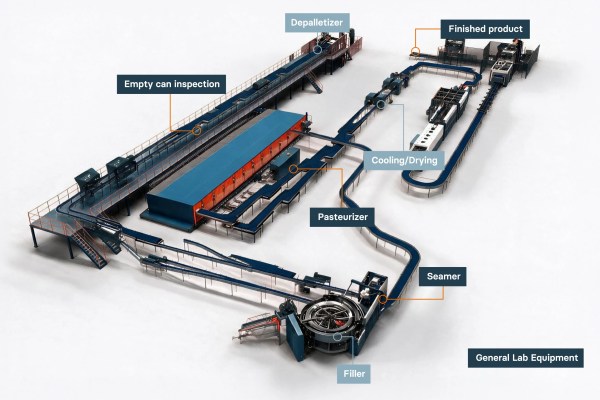
Explore every stage of the modern beverage can filling line with our interactive beverage can filling process map. From can depalletizing and rinsing through to filling, seaming, pasteurizing, and palletizing, each step in the process demands precision, consistency, and quality assurance. By hovering over each stage in the diagram below, you can discover the most…
-

Key terms Term Definition Double seam The mechanical interlock that joins a can end to the can body; the primary barrier against leaks. Non-destructive testing Inspection that measures a can without cutting or destroying it, allowing higher inspection frequency. Destructive teardown Traditional seam inspection that cuts the can apart to measure internal seam features by…
-

Beverage can manufacturing is a high-speed, high-volume business. A single line can turn coil into thousands of beverage cans a minute, through cupping, drawing and ironing, trimming, decorating, internal coating, necking, flanging and palletizing. Every one of those steps must stay within tight tolerances, because a small drift multiplied across a fast line becomes a…
