Knowledge Base
Featured Articles
-
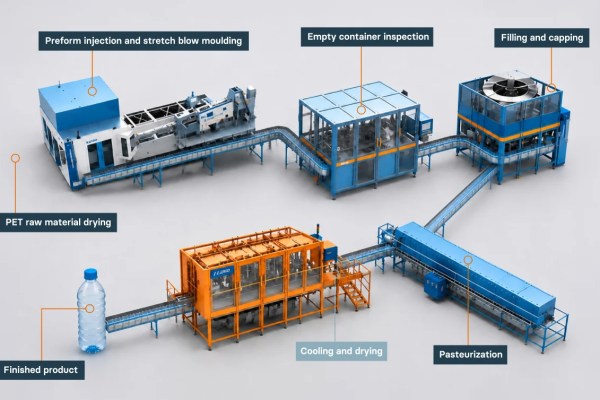
Explore every stage of the modern plastic bottle and container manufacturing process with our interactive process map. From raw material preparation and preform production through to stretch blow molding, filling preparation, inspection, labeling, and palletizing, every step requires precision, consistency, and rigorous quality control. By clicking on each stage within the diagram below, you…
-

Explore every stage of the modern canmaking line with our interactive beverage can manufacturing process map. From coil handling and cupping through to decorating, necking, and palletizing, each step in the process demands precision, consistency, and quality assurance. By hovering over each stage in the diagram below, you can discover the most relevant beverage can…
-

Overview Burst strength testing is one of the most widely used methods for evaluating the performance of sealed flexible packaging. It applies controlled internal pressure to a package until failure, measuring the point at which the seal or material gives way. For quality managers, R&D specialists, and operations experts working across flexible packaging production, burst…
-

Definition: Wet coating thickness measurement is the process of measuring the thickness of applied coating or paint layer immediately after it has been applied to a metal coil substrate — before the coated product enters the curing oven and dries. This is achieved using non-contact, optical sensor-based technology positioned inline at the point of application. Why it matters: In coil coating production lines, coatings travel at high…
-

Color consistency in metal can manufacturing refers to the ability to reproduce a brand's specified colors accurately and repeatedly across every decorated aluminum or steel beverage can - regardless of production run, facility, or geography. In the can-making industry, color is measured using three attributes: hue (the recognized color, such as red or blue), chroma (the vividness or saturation of that color), and lightness (how light or dark the color appears). These are quantified using…
-

Our metrology toolkit has been created by specialist experts with in-depth knowledge It offers insight and best practice advice for UK-based manufacturers working with CMMs, arms, height gauges, or master artefacts. Through UKAS-accredited Torus Metrology Services, you can rest assured that your metrology needs are being handled by true specialists with the appropriate knowledge, certifications, and expertise required to deliver results. Our free toolkit offers advice on…
-

To ensure that paints and coatings are easy to apply and durable in their nature, oils and additives are required. To know that the addition of these components doesn’t adversely affect the composition of your final paint or coating, you need thorough and efficient viscosity testing. Oils and lubricant additives in paint The addition of…
-

Can seaming to achieve robust, hermetically sealed metal packaging is a preferred practice to protect a wide range of types of products across many industries. An effective double seam is crucial to the integrity of a can. The process of can seaming has been around for decades and has undergone some massive transformations over the…
All Articles
Filters
Color consistency in metal can manufacturing refers to the ability to reproduce a brand's specified colors accurately and repeatedly across every decorated aluminum or steel beverage can - regardless of production run, facility, or geography. In the can-making industry, color is measured using three attributes: hue (the recognized color, such as red or blue), chroma (the vividness or saturation of that color), and lightness (how light or dark the color appears). These are quantified using…

Walk down any drinks aisle and the power of color is immediately apparent. The bold red of a cola can. The silver and blue of an energy drink. Consumers make brand decisions in seconds - and color is one of the primary triggers. For can makers supplying global beverage brands, getting color right isn't just…

A reference glossary for quality, R&D, and operations professionals working in metal packaging and rigid can making. Hue The fundamental color perceived by the eye - for example, red, blue, or green. One of three attributes used to define and measure color in the can-making industry. Chroma The vividness or saturation of a color -…

Walking the canned beverage aisle at the supermarket, or scanning the local shop’s shelves, your eyes are drawn to the striking product colors as you instantly recognize your preferred brands. Cultivating this familiarity is essential to beverage manufacturers. They make a significant investment in selecting the right blend of colors to attract customers and establish…

How high humidity affects electronics and how to test it Making electronics that can function in all sorts of environments can be tricky – so many environmental factors can test device integrity to the limit. High humidity is the sort of challenge lots of products are likely to face, so we’ve put together some advice…

Knowing what to look for – and how to describe it – is key when it comes to identifying and preventing double seam can defects. Our glossary of common issues is designed to help your seam testing process run as efficiently as possible. Common beverage can seam defects Can buckling Can buckling is an obvious…

The trusty double seam is relied upon by can makers and can fillers across multiple sectors as it protects all types of products with a robust, hermetic seal. An effective double seam is crucial to the integrity of a can. It creates a seal between the can body and lid (also known as the can…

Tensile & Pull Testing Equipment Tensile testing involves pulling a sample apart until it fails and then measuring the amount of tensile force involved. It’s a broad term that refers to all manner of force and materials testing applications that follow this process. There are many types of test procedures and applications that fall under…

Modulus of elasticity testing is an essential method for evaluating how resistant materials are to elastic deformation. When materials experience stress or force, they can deform, potentially leading to product defects, waste, and customer dissatisfaction. Ensure your materials can withstand the pressures they will encounter throughout their lifecycle with precise modulus of elasticity testing. Modulus…
