Knowledge Base
Featured Articles
-
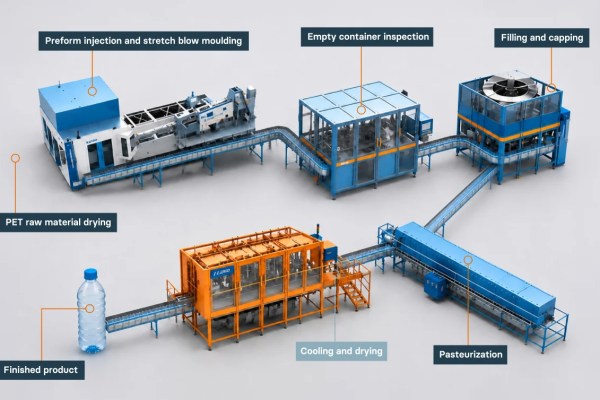
Explore every stage of the modern plastic bottle and container manufacturing process with our interactive process map. From raw material preparation and preform production through to stretch blow molding, filling preparation, inspection, labeling, and palletizing, every step requires precision, consistency, and rigorous quality control. By clicking on each stage within the diagram below, you…
-

Explore every stage of the modern canmaking line with our interactive beverage can manufacturing process map. From coil handling and cupping through to decorating, necking, and palletizing, each step in the process demands precision, consistency, and quality assurance. By hovering over each stage in the diagram below, you can discover the most relevant beverage can…
-

Overview Burst strength testing is one of the most widely used methods for evaluating the performance of sealed flexible packaging. It applies controlled internal pressure to a package until failure, measuring the point at which the seal or material gives way. For quality managers, R&D specialists, and operations experts working across flexible packaging production, burst…
-

Definition: Wet coating thickness measurement is the process of measuring the thickness of applied coating or paint layer immediately after it has been applied to a metal coil substrate — before the coated product enters the curing oven and dries. This is achieved using non-contact, optical sensor-based technology positioned inline at the point of application. Why it matters: In coil coating production lines, coatings travel at high…
-

Color consistency in metal can manufacturing refers to the ability to reproduce a brand's specified colors accurately and repeatedly across every decorated aluminum or steel beverage can - regardless of production run, facility, or geography. In the can-making industry, color is measured using three attributes: hue (the recognized color, such as red or blue), chroma (the vividness or saturation of that color), and lightness (how light or dark the color appears). These are quantified using…
-

Our metrology toolkit has been created by specialist experts with in-depth knowledge It offers insight and best practice advice for UK-based manufacturers working with CMMs, arms, height gauges, or master artefacts. Through UKAS-accredited Torus Metrology Services, you can rest assured that your metrology needs are being handled by true specialists with the appropriate knowledge, certifications, and expertise required to deliver results. Our free toolkit offers advice on…
-

To ensure that paints and coatings are easy to apply and durable in their nature, oils and additives are required. To know that the addition of these components doesn’t adversely affect the composition of your final paint or coating, you need thorough and efficient viscosity testing. Oils and lubricant additives in paint The addition of…
-

Can seaming to achieve robust, hermetically sealed metal packaging is a preferred practice to protect a wide range of types of products across many industries. An effective double seam is crucial to the integrity of a can. The process of can seaming has been around for decades and has undergone some massive transformations over the…
All Articles
Filters

Key terms Chain scission. The breaking of long polymer molecules into shorter chains, reducing molecular weight. Driven by heat, shear, and oxidation during use and reprocessing. Post-consumer recyclate (PCR). Material recovered from products that have completed their intended use and been collected from end users. Post-industrial recyclate (PIR). Material recovered from manufacturing scrap, trim, or…

How to validate the performance of recycled and sustainable plastics Reprocessed polymers inherently differ from virgin materials, so validating their performance calls for a deliberate, standards-led approach. This explainer sets out why recycled plastics need their own testing strategy, which properties to measure, how the core test methods work, and how to build a defensible…

What is recycled and sustainable plastics testing? Recycled and sustainable plastics testing is the structured measurement of the mechanical, flow, and durability properties of polymers that contain recycled content, carried out so manufacturers can confirm the material performs as required for its end use. It is a core part of quality control and R&D for…

Key terms Impact testing A test method measuring the energy a material absorbs when struck by a sudden, high rate force. Used to determine toughness, brittleness, and shock resistance. Izod impact test A pendulum based impact test where the specimen is clamped vertically with the notch facing the striker. Governed by ISO 180 and ASTM…

Overview Pendulum impact testing is the most widely used method for measuring a material's toughness. A weighted hammer is released from a known height, strikes a clamped specimen, and the energy absorbed at fracture is calculated from the height the pendulum rises to after impact. The result, expressed in joules, tells quality, R&D, and operations…

Definition of Impact testing Impact testing measures how much energy a material absorbs when struck by a sudden, high rate force. The energy absorbed at the point of fracture indicates the material's toughness, brittleness, and resistance to shock loading. Impact testing is a core requirement across plastics, polymers, composites, ceramics, and non ferrous metals, and…

Greater understanding of impact resistance of polymers and composites leads to materials and application innovation across a wide variety of industries. Along with quality assurance and standard reference data, impact testing also provides a fundamental understanding of a materials structure and allows for assessment in relation to end-use function. Advanced Impact Analysis Advanced impact analysis…

The automotive industry is an incredibly complex one. Today’s cars are incredibly powerful and also have intricate electrical systems as well as new technology, like sophisticated driver-assistance systems that enhance driver experience and safety. With so many varied components to consider, there are also a high number of safety standards to bear in mind –…

When it comes to the automotive industry, safety is always going to be a key concern. Manufacturers need to know that their vehicles are safe, reliable, profitable and as environmentally friendly as possible – and a complete and thorough testing process is an essential part of getting any new vehicle on the road. From testing…
