Knowledge Base
Featured Articles
-
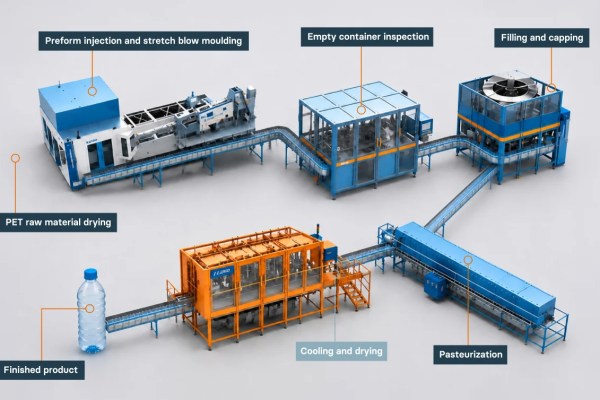
Explore every stage of the modern plastic bottle and container manufacturing process with our interactive process map. From raw material preparation and preform production through to stretch blow molding, filling preparation, inspection, labeling, and palletizing, every step requires precision, consistency, and rigorous quality control. By clicking on each stage within the diagram below, you…
-

Explore every stage of the modern canmaking line with our interactive beverage can manufacturing process map. From coil handling and cupping through to decorating, necking, and palletizing, each step in the process demands precision, consistency, and quality assurance. By hovering over each stage in the diagram below, you can discover the most relevant beverage can…
-

Overview Burst strength testing is one of the most widely used methods for evaluating the performance of sealed flexible packaging. It applies controlled internal pressure to a package until failure, measuring the point at which the seal or material gives way. For quality managers, R&D specialists, and operations experts working across flexible packaging production, burst…
-

Definition: Wet coating thickness measurement is the process of measuring the thickness of applied coating or paint layer immediately after it has been applied to a metal coil substrate — before the coated product enters the curing oven and dries. This is achieved using non-contact, optical sensor-based technology positioned inline at the point of application. Why it matters: In coil coating production lines, coatings travel at high…
-

Color consistency in metal can manufacturing refers to the ability to reproduce a brand's specified colors accurately and repeatedly across every decorated aluminum or steel beverage can - regardless of production run, facility, or geography. In the can-making industry, color is measured using three attributes: hue (the recognized color, such as red or blue), chroma (the vividness or saturation of that color), and lightness (how light or dark the color appears). These are quantified using…
-

Our metrology toolkit has been created by specialist experts with in-depth knowledge It offers insight and best practice advice for UK-based manufacturers working with CMMs, arms, height gauges, or master artefacts. Through UKAS-accredited Torus Metrology Services, you can rest assured that your metrology needs are being handled by true specialists with the appropriate knowledge, certifications, and expertise required to deliver results. Our free toolkit offers advice on…
-

To ensure that paints and coatings are easy to apply and durable in their nature, oils and additives are required. To know that the addition of these components doesn’t adversely affect the composition of your final paint or coating, you need thorough and efficient viscosity testing. Oils and lubricant additives in paint The addition of…
-

Can seaming to achieve robust, hermetically sealed metal packaging is a preferred practice to protect a wide range of types of products across many industries. An effective double seam is crucial to the integrity of a can. The process of can seaming has been around for decades and has undergone some massive transformations over the…
All Articles
Filters

Elastic Limit is defined as the point where a material can be stretched without causing permanent changes in the materials size or shape. If a material is stretched beyond the elastic limit, permanent deformation of the material will occur. Universal test machines are commonly used to perform this type of test along with certain accessories…

The three-point bend testing provides values for the modulus of elasticity in bending and the flexural stress–strain properties of the material being tested. One advantage of three-point flexural testing over other methods is the ease of the specimen preparation. Very little preparation is usually required for a bend/flex tester. A deflection coil may also be…

Modulus of elasticity testing is an essential method for evaluating how resistant materials are to elastic deformation. When materials experience stress or force, they can deform, potentially leading to product defects, waste, and customer dissatisfaction. Ensure your materials can withstand the pressures they will encounter throughout their lifecycle with precise modulus of elasticity testing. Modulus…
