Knowledge Base
Modulus of Elasticity Testing

Modulus of elasticity testing is an essential method for evaluating how resistant materials are to elastic deformation. When materials experience stress or force, they can deform, potentially leading to product defects, waste, and customer dissatisfaction.
Ensure your materials can withstand the pressures they will encounter throughout their lifecycle with precise modulus of elasticity testing.
Modulus of elasticity meaning
The modulus of elasticity measures a material’s stiffness. The calculation is made applying force to a material and dividing the stress applied by the resulting elastic strain.
Stiffer materials have a higher modulus of elasticity. For example, steel has a much higher modulus than flexible materials like rubber.
Types of modulus of elasticity testing
| Type of Test | Description | Common Applications |
| Young’s Modulus | Measures resistance to length changes under tension or compression. | Steel, concrete, plastics, wood |
| Shear Modulus | Evaluates a material’s rigidity under shear forces. | Adhesives, polymers, structural materials |
| Bulk Modulus | Determines material response to uniform hydrostatic pressure. | Concrete, underwater structures, industrial coatings |
There are several different types of modulus of elasticity, the most common being:
Young’s modulus: Evaluating Rigid Materials
Young’s modulus, also called tensile modulus or traction modulus, is used to measure a material’s ability to withstand tension or compression. It is essential for evaluating the elasticity of rigid materials used in construction and manufacturing.
Learn more in our Young’s Modulus Testing Guide.
Shear modulus: Determining Material Rigidity
Shear modulus testing, also sometimes known as modulus of rigidity testing, is a method of determining the elastic shear stiffness of a material. It uses the ratio of shear stress to the shear strain to measure elasticity. It is typically carried out via a static torsion test or by a dynamic test that tends to use a torsional pendulum.
Bulk modulus: Measuring Response of Elasticity Test
Bulk modulus testing is a way of determining a material’s response to (uniform) hydrostatic pressure. This is very useful for testing building or construction materials that may be used in underwater settings, from sea stations to swimming pools.
Materials suitable for modulus of elasticity testing
Modulus of elasticity testing is suitable for determining the elasticity of a wide variety of materials and in commonly used in a variety of industries. A few of the materials most frequently tested include:
| Material | Common Uses |
| Steel | Bottle caps and twist-off closures |
| Concrete | Manual |
| Wood | Construction, furniture manufacturing |
| Plastics & Polymers | Automotive industry, packaging |
Modulus of Elasticity Testing Solutions
United Testing Systems, part of Industrial Physics, provides a comprehensive range of universal testing machines (UTMs) designed for modulus of elasticity testing.
These industry-leading instruments are also capable of performing tension (pull testing), compression, and bend/flex testing.
From our 2.5 kN (550 lbf) single-column system up to our 2,000 kN (450,000 lbf) servo-hydraulic system, Industrial Physics’ test frames are known for their quality, durability, and affordability.
Once, you’ve performed your test and viewed the results on our easy-to-read display screens or transferred them to a graph. You can see the modulus of elasticity plotted as the ratio of the stress in relation to the corresponding strain (displacement). Different types of elastic modulus can be measured, including Young’s modulus, shear modulus and bulk modulus.
Industrial Physics’ test systems, along with our DragonFly UTS software package and wide selection of grips and extensometers, give you a highly accurate tool for performing this critical material test procedure.
| Model | Capacity | Application |
| UTM 2.5 kN | 2.5 kN (550 lbf) | Lightweight materials, plastics |
| UTM 50 kN | 50 kN (11,000 lbf) | Metals, composites |
| UTM 2000 kN | 2000 kN (450,000 lbf) | Concrete, high-strength materials |
Request a personalized quote here.
Understanding universal testing machines
If you’re looking for extra information or a visual idea of how some of the components or parts look in action, have a watch of our short video with a handy overview of UTMs:
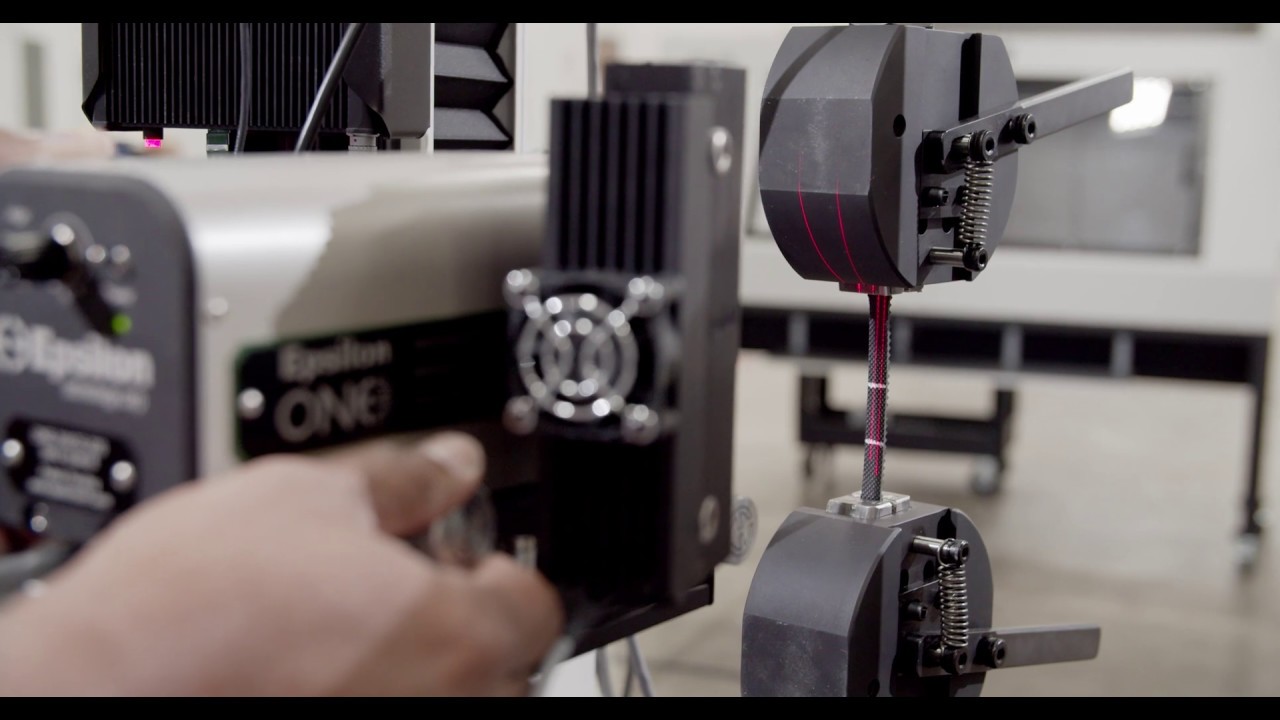
To get an even better idea of what universal testing machines are and wrap your head around some of the technical terms, check out our UTM glossary.
ASTM standards for Modulus of Elasticity Testing
Applicable to such a wide range of materials and used throughout a number of industries, it won’t come as a surprise to find out that there are lots of different ASTM standards associated with modulus of elasticity testing. It’s important to be confident that no matter what material you’re testing, your test and measurement solution is capable of meeting industry standards.
Industrial Physics ensures our testing solutions comply with the most relevant ASTM standards, guaranteeing accuracy and reliability.
ATSM standards include:
| ASTM Standard | Applicable Materials |
| ASTM A36/A36M | Carbon structural steel |
| ASTM C469 | Concrete under compression |
| ASTM D638 | Plastics |
| ASTM D7205 | Fiber-reinforced polymer matrix composite bars |
| ASTM E111 | Young’s modulus for metallic materials |
Explore our Standards page for more information, including a section dedicated to ASTM standards.
Frequently Asked Questions (FAQ)
How long does a modulus of elasticity test take?
Test duration depends on the material and method, but most tests take between 5 and 30 minutes.
Why is modulus of elasticity testing important?
It helps manufacturers select appropriate materials, improve structural integrity, and enhance product durability.
Modulus of elasticity testing with Industrial Physics
Get all the support you need for modulus of elasticity testing with Industrial Physics. Our specialist testing brands, such as United Testing and Ray-Ran, are industry leaders in delivering fast and efficient testing solutions. With our expert engineers and advanced testing equipment, we provide high-quality, reliable solutions for all your modulus of elasticity testing requirements.
Explore our UTM range for precise and efficient testing solutions.
Looking for precise testing solutions? Contact us for expert guidance and a customized quote. Get a Quote Now
Was this useful?
Related Products
-

United Testing DFM Series Floor Model Universal Test Machine (UTM), 100-600 kN
The United Testing DFM Series is a floor-model universal testing machine available in 100, 150, 300 and 600 kN force capacities - built for tensile, compression, flex and advanced materials testing across aerospace, automotive, construction and R&D applications, with DragonFly UTS software included as standard.

-

United Testing UTM (Universal Testing Machine) - DSTM 5-25 kN Table Top
The United Testing DSTM Series is a table-top universal testing machine available in 5, 10, 20 and 25 kN capacities - built for plastics, films, rubber, textiles, adhesives and small-fastener testing with DragonFly UTS software included as standard.
-

United Testing UTM (Universal Testing Machine) DTM 50-100 kN Table Top
United’s DSTM-50 and 100KN Universal Testing Machine (UTM) test frame is ideal for testing samples up to 100kN (22,200 lbf.). From basic tension and compression testing to advanced materials testing the DSTM 50 and 100kN are versatile test systems used across virtually all industries.
FAQs
-
Modulus of elasticity, or Young’s modulus, measures a material’s ability to deform elastically under stress.
-
It is tested using tensile or compression tests to determine the material’s stiffness.
Related Articles
-

Key terms Term Definition Gloss The degree to which a surface reflects light in the specular (mirror) direction. Higher gloss means a shinier surface. Specular reflection Light reflected at the equal and opposite angle to the incident light, as from a mirror. 75 degree geometry The measurement angle used for paper and board gloss, taken…
-

Gloss is the visual perception of shininess, and it comes from the way a surface reflects light. When light hits a very smooth surface, most of it reflects in a single direction, the specular direction, and the surface looks glossy. When the surface is rough or open, light scatters in many directions and the surface…
-

Gloss is a measure of how much light a paper or board surface reflects in the specular, or mirror, direction. A high-gloss sheet reflects light sharply and looks shiny. A matte sheet scatters light and looks dull. In the paper and board industry, gloss is a controlled optical property because it shapes how printed packaging,…
